OSSLT screening and diagnostics
Screen a whole class in one period, then see each student's level and the one skill to fix next. Coming in Litguide 3.0.
Four levels, one framework
Every result uses the four levels in Litguide's rubrics. Each level lines up with the writing codes in EQAO's OSSLT Framework, so teachers read one scale for the whole diagnostic.
Level 1
Not ready for the OSSLT yet
Limited effectiveness
No clear opinion, or ideas with no support. Errors get in the way of meaning.
Level 2
Getting ready for the OSSLT
Some effectiveness
A clear opinion, but details are thin or vague. Errors distract.
Level 3
Almost ready for the OSSLT
Considerable effectiveness
Enough details, though only some are specific. Errors do not distract.
Level 4
Very ready for the OSSLT
High degree of effectiveness
Specific, well-chosen details in a logical order. Control of conventions.
Step 1 of 3: Questions
Practice Questions
Attempts: 0/3How attempts work. Answer all five, then choose Check Your Responses. Right answers lock in green. Wrong answers turn red with a hint, so the student can try again. There are 3 attempts in all.
Each question's level comes from the try it was answered right on:
- 1st tryLevel 4
- 2nd tryLevel 3
- 3rd tryLevel 2
- Not yetLevel 1
3 attempts. Answer every question, then check.
Read Text
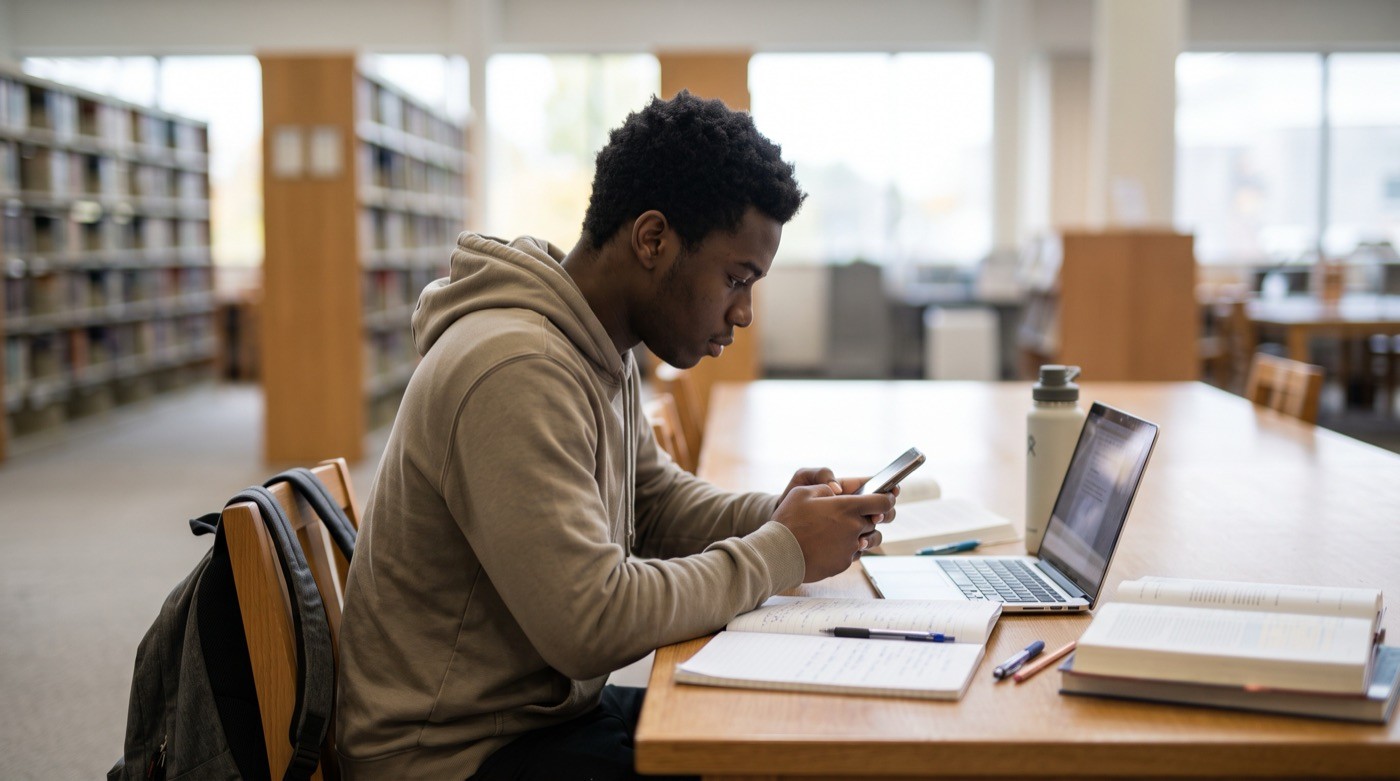
Social Media and Mental Health
[1] Social media has become an integral part of many teenagers' lives, with a large majority of them using various platforms on a regular basis. While social media can provide valuable support and entertainment for teens, it also poses risks to their mental health. Studies have shown that excessive use of social media, particularly spending more than three hours a day on it, can increase the likelihood of mental health problems such as depression and anxiety. The negative impact of social media on mental health may be exacerbated by factors such as social comparison, feedback seeking, and passive use of social media.
[2] One reason social media can negatively affect teenagers' mental health is by depriving them of important social cues that they would normally learn through in-person communication. This can lead to increased callousness, anxiety, and insecurity. Additionally, the "culture of comparison" mindset prevalent on social media can be particularly damaging, as teenagers compare themselves to others and feel inadequate or isolated. Cyberbullying is another significant risk associated with social media use, because hurtful messages can reach teenagers at any hour and follow them home from school.
[3] Despite the potential risks, social media use is not inherently beneficial or harmful to young people. The effects of social media depend on various factors, including the individual's personal and psychological characteristics, social circumstances, and how they shape their own social media experiences. Working with teenagers by setting a good example, establishing tech-free zones and hours, and encouraging involvement in offline activities can help mitigate the negative impact of social media on teenagers' mental health.